
2026-09-19 · Marcus Thorne
How to Spot Roof Rat Entry Points Around Joplin Foundation Vents
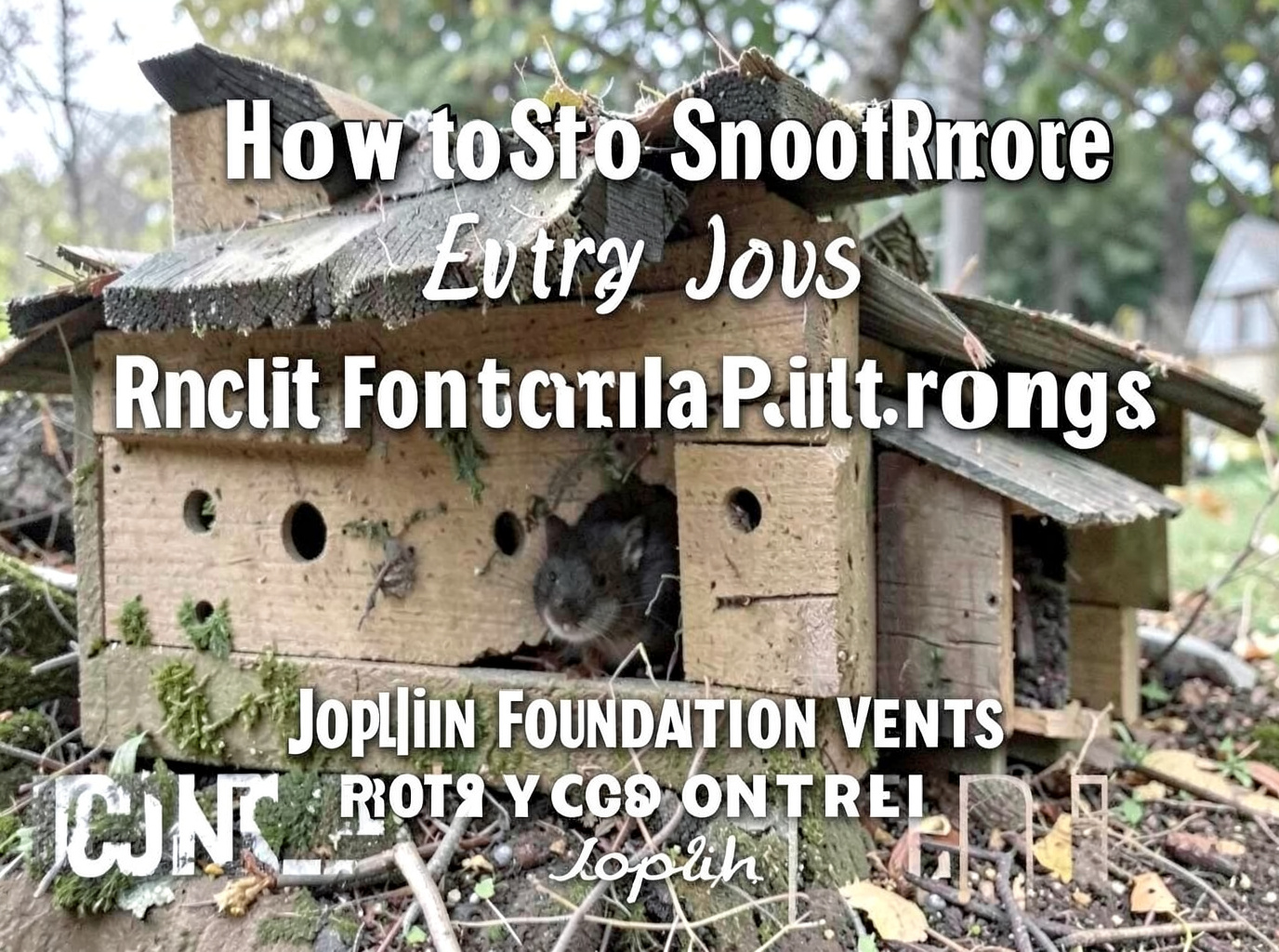
Spotting roof rat entry points around foundation vents in Joplin homes primarily involves looking for gaps as small as 0.5 inches, gnaw marks, rub marks, and droppings. These agile rodents, common throughout Jasper County, are adept at squeezing through surprisingly small openings, making foundation vents — particularly those with damaged screening or loose frames — prime targets. The humid subtropical climate with severe spring storms we experience here often leads to wear and tear on home exteriors, creating new vulnerabilities that roof rats quickly exploit, especially in older homes found in areas like Downtown Joplin or North Joplin. Understanding these signs is the first step in protecting your home from a full-blown infestation.
Understanding Roof Rat Behavior Around Foundations
Roof rats, often mistaken for Norway rats, are excellent climbers and prefer to live in elevated areas like attics, trees, and, yes, the upper parts of foundation walls. However, they frequently access homes through ground-level entry points such as foundation vents, especially when seeking shelter from the elements or foraging for food. In Joplin, where homes range from historic structures to newer builds, foundation vents can present various vulnerabilities. The older homes, in particular, may have original vents that have deteriorated over decades, offering easy access. These rats are nocturnal, so you're unlikely to see them during the day; instead, you'll need to look for the tell-tale signs they leave behind.
Their behavior dictates that they'll explore any potential opening, and a damaged foundation vent is an open invitation. They are also driven by environmental factors. When the severe spring storms hit Joplin, or when winter temperatures drop, these rats are actively seeking warm, dry shelter. A compromised foundation vent offers exactly that, leading them into crawl spaces and eventually, wall voids and attics. Recognizing this behavior is crucial for effective <a href="/services/rodent-exclusion">rodent exclusion</a> efforts.
Visual Inspection for Entry Points
A thorough visual inspection is your primary tool for identifying roof rat entry points. Start by walking the perimeter of your home, paying close attention to every foundation vent. Look for any signs of damage to the vent screens or frames. Even a small tear or a bent corner can be enough for a roof rat to gain access. These vents are often made of plastic or thin metal, materials that are easily compromised over time by weather, landscaping activities, or even other pests. Don't forget to inspect vents on all sides of the house, as rats may prefer less trafficked areas.
Consider the age of your home and the materials used for its foundation vents. Older homes in areas like North Joplin might have vents that are simply worn out, while even newer constructions can have poorly sealed or improperly installed vents. Pay particular attention to the corners and edges where the vent meets the foundation, as these are common areas for gaps to form. A flashlight can be incredibly helpful, allowing you to peer into darker recesses and spot subtle signs of activity or damage that might otherwise go unnoticed.
Gnaw Marks and Rub Marks
One of the most definitive signs of roof rat activity around foundation vents is the presence of gnaw marks. Roof rats, like all rodents, have continuously growing incisors that they must wear down. They will gnaw on almost any material, including wood, plastic, and even soft metals, to create or enlarge an opening. These marks are typically 0.125 to 0.25 inches wide, with parallel grooves from their teeth. If you see fresh gnaw marks around the edges of a foundation vent, it's a strong indicator that rats are using or attempting to use that spot as an entry point.
Rub marks, also known as grease marks or smudge marks, are another key indicator. As roof rats repeatedly travel through a confined space, the oils and dirt from their fur leave dark, greasy smudges along their path. Around foundation vents, you might find these marks along the bottom edge of the vent, on the surrounding foundation, or even on pipes or wires leading into the vent. These marks often indicate a well-established travel path, suggesting frequent use by rodents. The presence of both gnaw marks and rub marks around a vent is a clear sign of an active infestation.
Droppings and Urine Stains
The presence of droppings is an undeniable sign of rodent activity. Roof rat droppings are typically spindle-shaped, with pointed ends, and about 0.5 inches long. They are usually found in clusters near entry points, along travel paths, and in areas where rats are nesting or feeding. Around foundation vents, you might find droppings directly underneath the vent, inside the crawl space if you can access it, or on ledges and pipes nearby. The freshness of the droppings can give you an idea of how recently the rats have been active; fresh droppings are dark and shiny, while older ones are dull and crumbly.