
2026-09-19 · Marcus Thorne
Why Mice Invade Joplin Attics Once Temperatures Drop Below Freezing
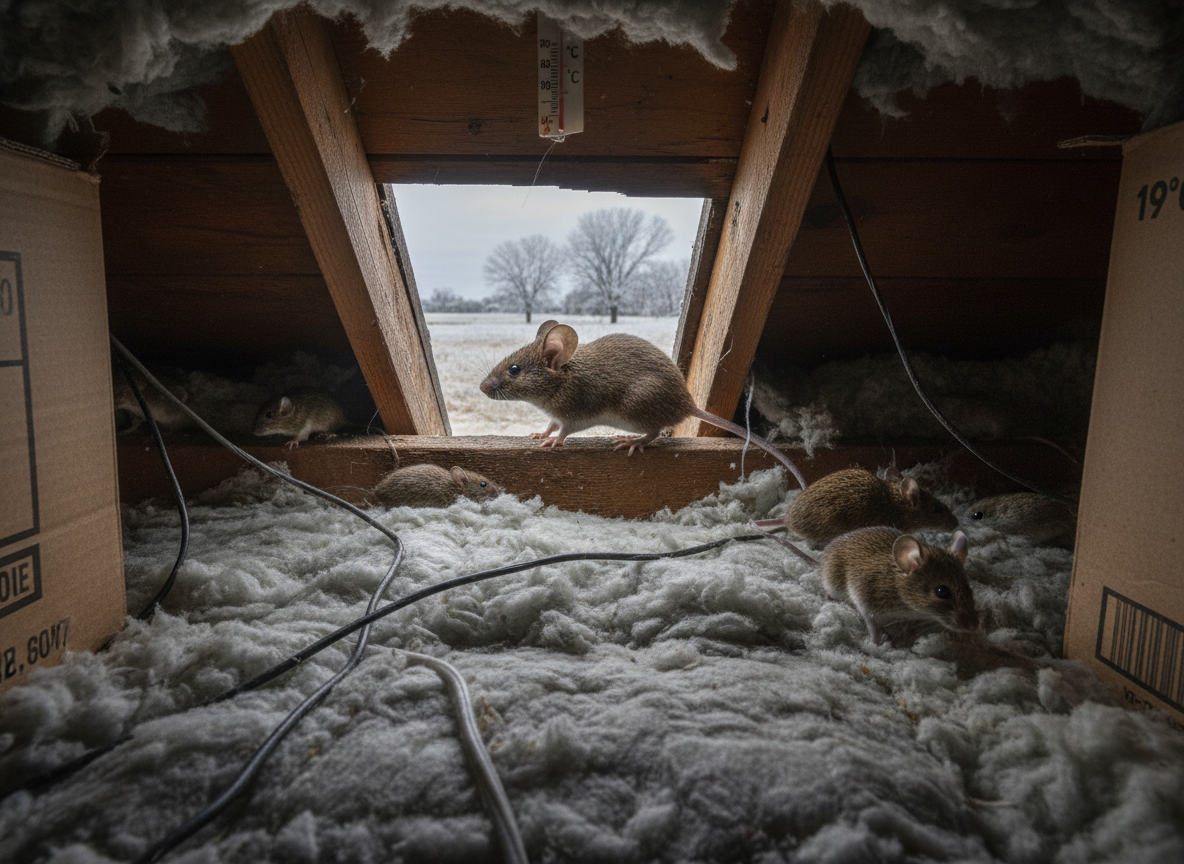
Mice invade Joplin attics once temperatures drop below freezing primarily because these spaces offer critical warmth, shelter from the harsh winter elements, and a safe, undisturbed environment away from predators. As the humid subtropical climate of Jasper County transitions from crisp autumn days to the biting cold of winter, particularly after severe spring storms have often left behind minor structural weaknesses, mice instinctively look for insulated areas. Attics provide consistent temperatures, often 20–30 degrees Fahrenheit warmer than the outside air, making them an irresistible refuge for rodents seeking to survive the season. This drive for survival is amplified by the fact that mice can suffer from hypothermia and die if exposed to prolonged freezing temperatures, pushing them to exploit even the smallest gaps in your home's exterior.
The Urgent Need for Warmth and Shelter
Joplin's winters, while not always extreme, regularly see temperatures fall below freezing, especially overnight. For a small mammal like a house mouse, which has a body temperature of around 98.6°F (37°C), maintaining this warmth is a constant battle. An attic, even one that isn't perfectly sealed, offers a significant thermal advantage over outdoor nesting sites. This is particularly true in older homes prevalent in areas like Downtown Joplin or North Joplin, where insulation might be less robust or where years of weather exposure have created subtle entry points. These rodents are not just looking for a place to stay warm; they're looking for a place to thrive, safe from the elements and predators like owls and coyotes that might roam near Schifferdecker Park.
The push for shelter also intensifies after the area experiences its characteristic severe spring storms. These storms, common in our humid subtropical climate, can cause minor damage to roofing, siding, and foundation perimeters, creating new or enlarging existing access points that become critical pathways for mice once cold weather arrives. A small crack around a vent or a loose piece of fascia, perhaps unnoticed during warmer months, becomes a gaping doorway for a mouse seeking refuge from the cold. Understanding these vulnerabilities is key to effective rodent exclusion around your property.
Common Entry Points into Joplin Attics
Mice are incredibly resourceful and can squeeze through openings as small as a dime, or about 1/4 inch. In Joplin homes, particularly those built decades ago, there are several common vulnerabilities that become prime entry points into attics. These include gaps around utility lines where they enter the house, such as electrical conduits, plumbing pipes, and HVAC lines. Unsealed soffits, especially where they meet the roofline, are another frequent access point. Damaged or poorly screened attic vents, often compromised by years of weather or even previous storm damage, also provide easy access. Additionally, gaps in fascia boards, loose shingles, or even small openings around chimneys can serve as rodent highways directly into your attic space.
It's not uncommon for us to find evidence of mice using these routes in homes near the Joplin Museum Complex, where varied architectural styles present different challenges. Even a seemingly minor gap can be exploited. For instance, a mouse might climb a rough-textured brick wall or a downspout to reach a compromised soffit. Identifying and sealing these specific points is crucial for preventing future infestations, a core component of our rodent entry point sealing services.
Food and Water Sources: Not Just About Warmth
While warmth is a primary driver, mice also seek attics for potential food and water sources, even if these are indirect. Attics can sometimes house forgotten food items, pet food stored improperly, or even insects that serve as a food source. More commonly, however, mice in attics are drawn by the proximity to food sources elsewhere in the house. Once in the attic, they can easily navigate through wall voids and drop down into kitchens, pantries, or other areas where food is readily available. This makes an attic a strategic base of operations for a mouse colony.
Water, too, can be found indirectly. Condensation on pipes, leaks from the roof, or even moisture from poorly vented bathrooms can provide the hydration mice need. The humid subtropical climate of Jasper County means that even in winter, there can be enough ambient moisture for mice to survive for extended periods in an attic without direct access to a water bowl. It's a common misconception that attics are devoid of resources; in reality, they offer a surprising amount for a determined rodent. For more on identifying these issues, refer to our article on How to Spot Roof Rat Entry Points Around Joplin Foundation Vents.
The Breeding Ground Advantage
Beyond survival, attics provide an ideal environment for mice to breed, ensuring the continuation of their species. The undisturbed nature of most attics, combined with consistent temperatures, creates a safe nursery for litters. A female mouse can produce 5–10 litters per year, with each litter containing 5–12 pups. This rapid reproduction rate means that a small initial invasion of 1-2 mice can quickly escalate into a significant infestation within weeks, especially in the insulated comfort of an attic. This is a common scenario we encounter in residential areas from Carthage to Webb City, where homes provide ample opportunity for rodent populations to flourish.